
What Is Snail Mucin and What Does It Actually Do for Your Skin?
Last updated 21 June 2026
Snail mucin is the single most-Googled K-Beauty ingredient, and also the most misunderstood. It sounds gross, the marketing makes it sound magical, and the truth sits in the middle. This is the honest explainer: what snail mucin is, how it is collected, what the formula actually does for your skin, and the smartest way to use it in a routine without wasting money.
Snail mucin in one sentence
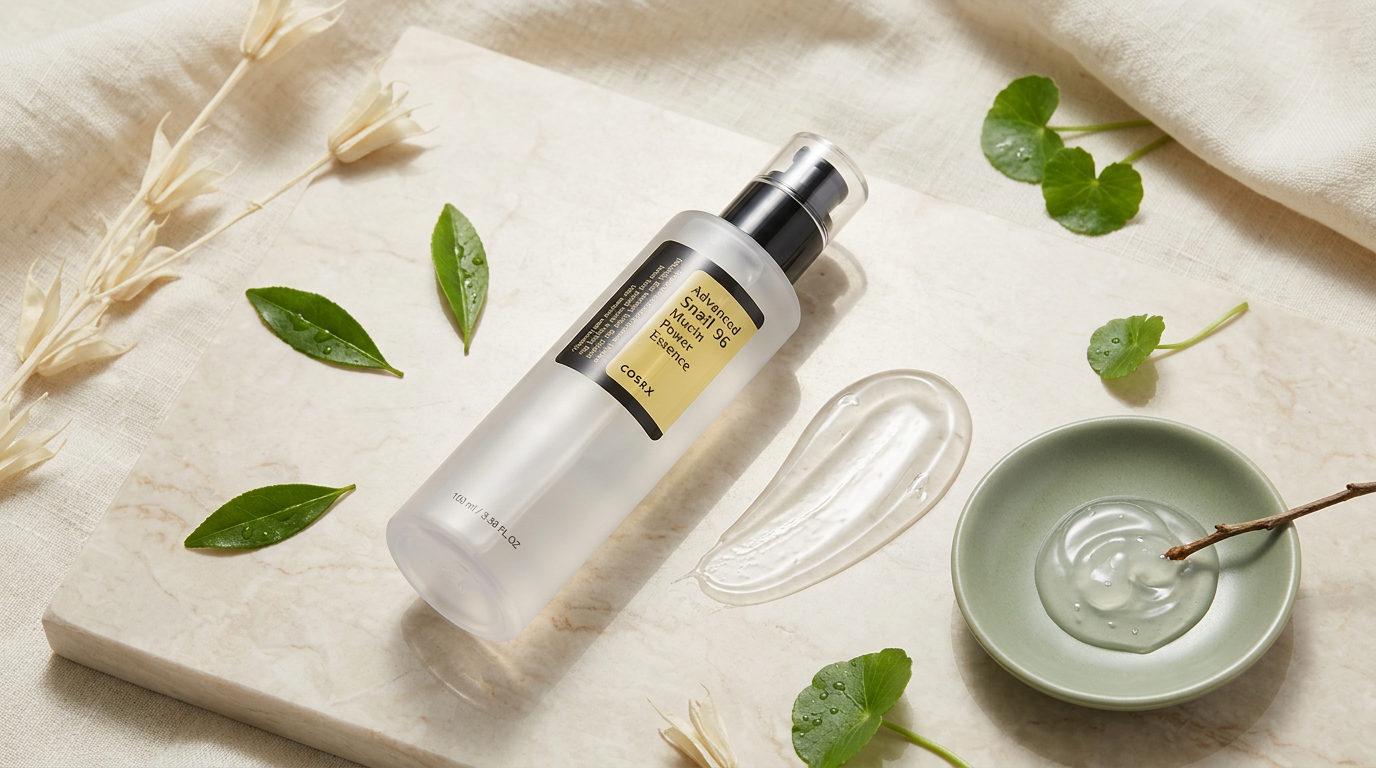
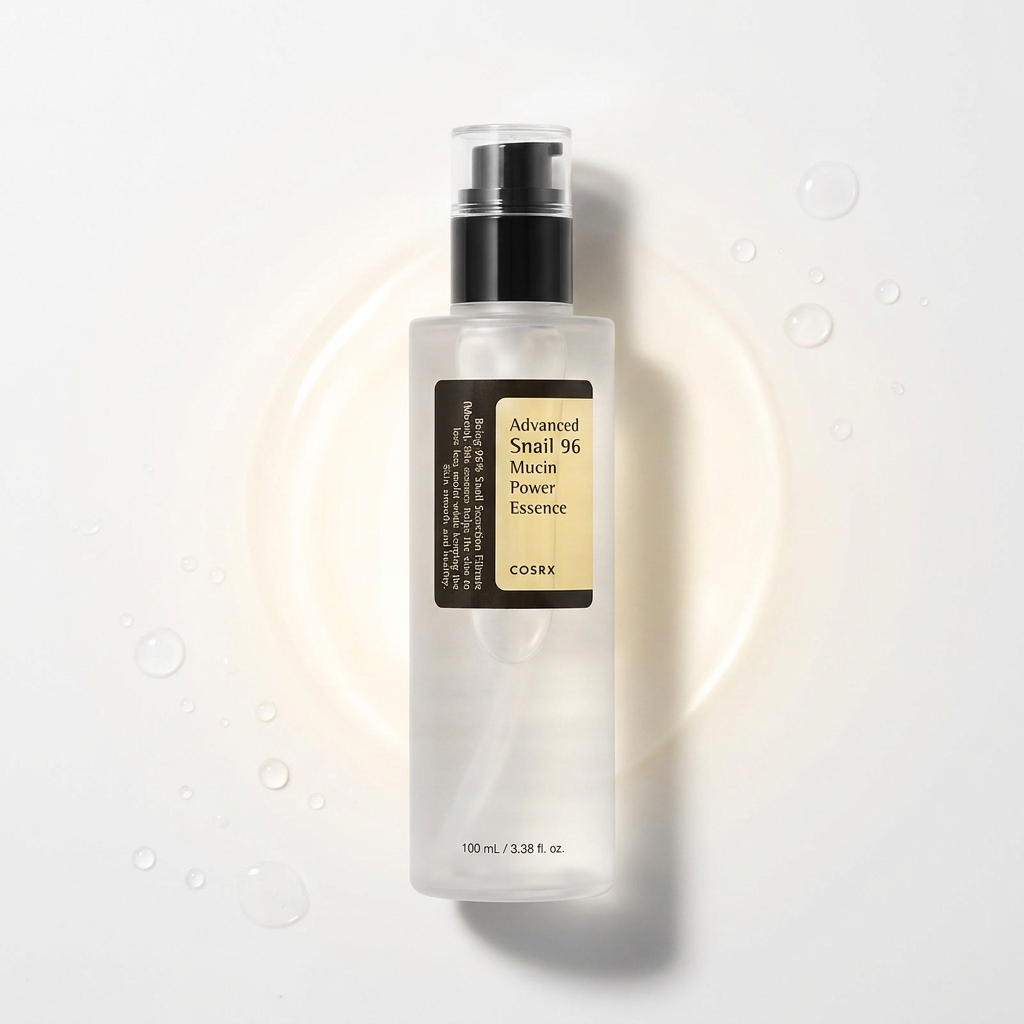
Snail mucin is the clear, sticky secretion that garden snails produce when they move or feel stressed. In skincare it is filtered, concentrated, and listed on labels as Snail Secretion Filtrate (SSF). The most famous K-Beauty version, COSRX Advanced Snail 96 Mucin Power Essence, is 96 percent SSF.
Used on skin, it acts as a hydrator, a mild humectant, a barrier-supporting film former, and a low-risk soothing ingredient. It is not a miracle cure for acne or wrinkles, but it is one of the best-tolerated repair ingredients in modern skincare.
What is actually in snail mucin
Snail secretion is a natural cocktail of large and small molecules. The most relevant for skincare are:
Glycoproteins and proteoglycans, which hold water against the skin and form a thin breathable film.
Hyaluronic acid (yes, naturally), a humectant that pulls moisture into the upper layers of the skin.
Glycolic acid in trace amounts, gentle enough that it does not behave like an AHA exfoliant.
Allantoin, a well-studied soothing ingredient also used in nappy creams and post-procedure balms.
Copper peptides and zinc, which support wound healing and barrier repair at very small concentrations.
Antimicrobial peptides that help calm acne-prone, reactive skin.
Together, this is closer to a multi-ingredient serum than a single active. That is why snail mucin formulas tend to feel hydrating, plumping, and calming all at once.
What snail mucin actually does for your skin
Based on peer-reviewed studies and a decade of real-world K-Beauty use, snail mucin reliably delivers four things:
1. Hydration. The glycoprotein and HA content gives skin a plumper, dewier finish within minutes. This effect is immediate and visible.
2. Barrier support. The film snail mucin leaves behind reduces transepidermal water loss, which is the technical way of saying it stops your skin drying out between applications. This is the main reason it pairs well with retinol and exfoliants.
3. Light wound healing. The allantoin, peptides, and copper traces accelerate the repair of small abrasions, fresh acne marks, and post-procedure redness. This is well-documented in dermatology research on snail filtrate.
4. Anti-inflammatory support. Snail mucin calms reactive, post-acne, post-laser, or sun-stressed skin without the irritation risk of stronger soothing actives.
What it does not do: it is not a wrinkle eraser, it does not bleach pigmentation, and it does not replace SPF, retinol, or vitamin C. Think of it as the supportive layer that makes the rest of your routine more tolerable.
How is snail mucin actually collected?
This is the question that puts most people off, and the answer is more boring than the internet suggests. Reputable Korean producers (the supply chain that COSRX, Beauty of Joseon, Mizon and Benton draw from) use cruelty-free harvesting in temperature-controlled rooms.
Snails are placed on a mesh surface in a dim, humid environment. They move naturally and leave a thin trail of secretion on the mesh. The secretion is collected, the snails are returned to their habitat, and the harvest is repeated on a rest cycle.
Older, less ethical methods used salt or vibration to stress the snails into producing more mucus. Major K-Beauty brands moved away from those practices over a decade ago, and the leading suppliers in Korea publish cruelty-free certifications. If a brand will not say how their snail mucin is sourced, treat that as a red flag.
Does snail mucin clog pores?
For the overwhelming majority of users, no. Snail mucin itself has a comedogenic rating of zero in most ingredient databases, and the formulas that are 90 percent and up SSF (like the COSRX essence) are well tolerated by acne-prone skin.
When people break out from a snail mucin product, the cause is usually one of three things: an occlusive base added to a cream version (look at the full INCI, not just the headline ingredient), fungal acne reacting to fatty alcohols or polysorbates in the formula, or simple purging if you started using it alongside a new active like retinol or BHA.
If you are fungal-acne prone (small uniform bumps across the forehead, chest or back), check the formula on Skinsort or Sezia before buying.
When and how to use snail mucin in a routine
Snail mucin lives in the essence or serum step, after your toner and before your moisturiser. The full order for a basic routine:
1. Cleanser. AM single cleanse, PM double cleanse.
2. Hydrating toner.
3. Snail mucin essence or serum.
4. Treatment serum (vitamin C, niacinamide, retinol, etc.).
5. Moisturiser.
6. Sunscreen, AM only.
Apply two to three pumps to damp skin. Pat in (do not rub), wait 30 to 60 seconds for the slightly tacky finish to settle, then move on. Use AM, PM or both, daily.
Snail mucin and other actives
One of the reasons snail mucin became a K-Beauty cult ingredient is that it plays well with almost everything else. Quick compatibility read:
| Pair with | Verdict | Why |
|---|---|---|
| Niacinamide | Excellent | Both are soothing and barrier-supporting. Layer snail mucin first. |
| Hyaluronic acid | Excellent | Stacked humectants. Apply both on damp skin for the best result. |
| Retinol | Excellent | Snail mucin buffers retinol irritation. Apply snail first, retinol second, moisturiser to seal. |
| Vitamin C | Good | Use vitamin C AM, snail mucin both AM and PM. No interaction issues. |
| AHA, BHA, PHA | Good | Use the exfoliant first on clean skin, wait 5 to 10 minutes, then layer snail mucin to soothe. |
| Benzoyl peroxide | Cautious | BP can oxidise sensitive ingredients. Use BP on its own and add snail mucin in the alternate routine. |
Snail mucin compatibility with common actives.
The three snail mucin products worth your money in 2026
If you want to test the ingredient without overthinking it, these are the formulas we recommend most:
1. COSRX Advanced Snail 96 Mucin Power Essence. The original, 96 percent SSF, lightweight watery texture, perfect first snail mucin product. Around 20 to 26 EUR for 100 ml.
2. Mizon Snail Repair Intensive Ampoule. 80 percent SSF in a slightly richer formula with added peptides. Better for dry or mature skin. Around 18 to 25 EUR.
3. Beauty of Joseon Repair Serum (Ginseng + Snail Mucin). Adds ginseng for a glow finish and a more sophisticated texture. The pick if you want one product that hydrates and brightens at the same time. Around 17 to 22 EUR.
Reader favorites
The products from this guide our readers click most.
Swipe for more →
Frequently asked
Products in this guide
Prices, ratings and short verdicts from our database, linked to the full product page.
Keep reading
Tool
Build your routine
Pick skin type, concern and budget. Get a step-by-step routine with real products.
Tool
Check ingredient conflicts
Safe to combine, separate AM/PM, or skip. Clear verdicts for any two ingredients.