
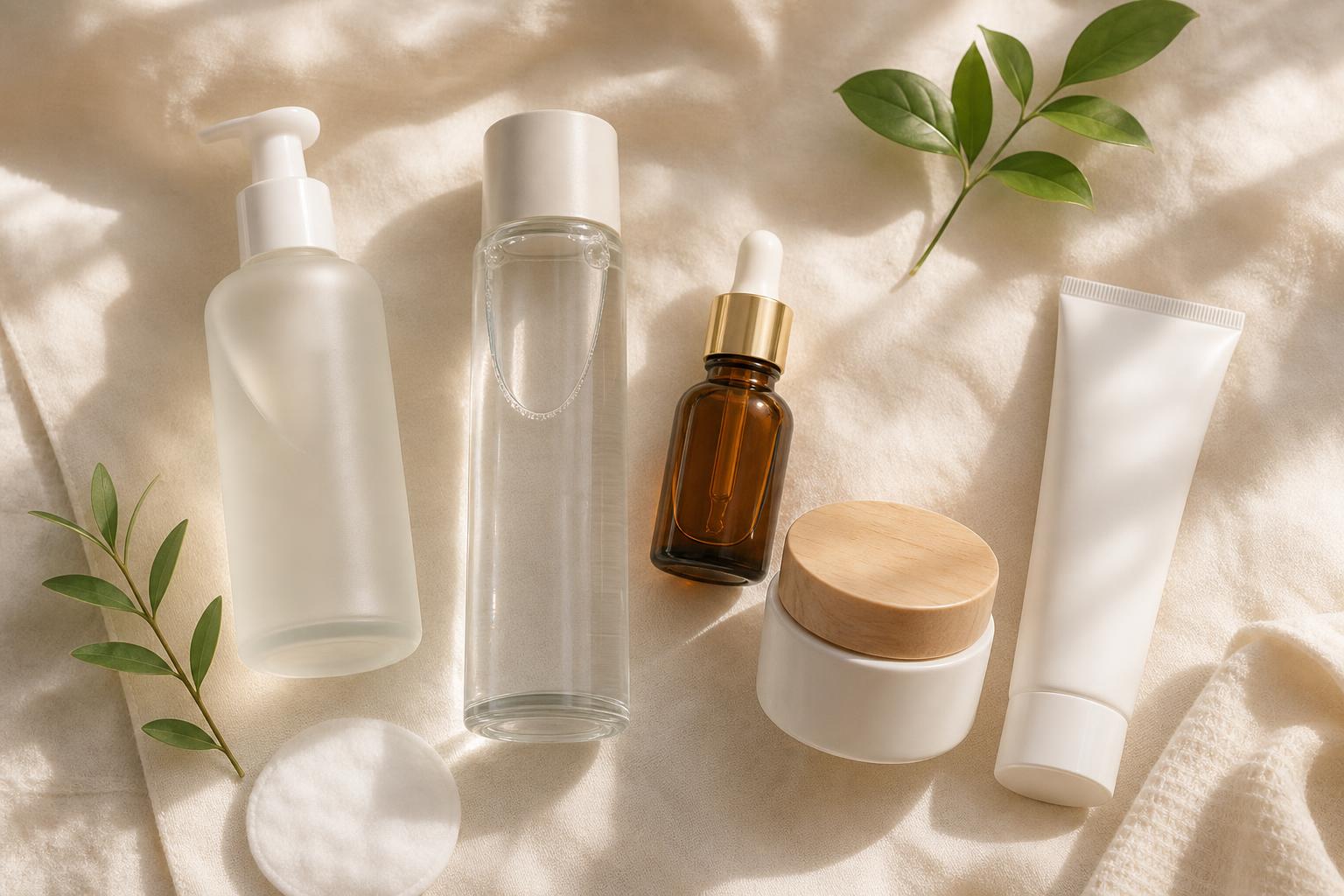
K-Beauty Routine for Beginners: Where to Actually Start
Last updated 21 June 2026
Most K-Beauty guides drop you straight into a 10-step routine and a shopping list of 25 products. That is how people give up after a week. Start with five products, get them right, then add more only when you know what your skin actually wants.
The 5-product starter kit
Gentle water cleanser. Low pH, no fragrance, works for every skin type.
Hydrating toner or essence. Think humectants like hyaluronic acid, glycerin, snail mucin, beta-glucan.
One treatment serum. Pick based on your main concern. See the next section.
A lightweight moisturiser. Gel-cream for oily and combination skin, richer cream for dry skin.
A daily SPF 50 sunscreen. Korean sunscreens are still the gold standard for cosmetic finish.
Pick your one treatment serum
Dryness and dullness: snail mucin or a peptide ampoule.
Acne and oiliness: niacinamide 5% or a propolis essence.
Redness and sensitivity: centella asiatica (Cica) or madecassoside.
Hyperpigmentation and uneven tone: vitamin C in the morning or alpha arbutin.
Early signs of ageing: retinal or retinol at night, two to three times a week to start.
Your first 4-week routine
Week 1 and 2: cleanser, toner, moisturiser, sunscreen. That is it. Let your skin reset.
Week 3: add the treatment serum every other night between toner and moisturiser.
Week 4: move to daily if your skin is happy. If it stings or breaks out, drop back to alternate nights.
After a month you will know what works. Then you can think about adding an essence, sheet masks, an exfoliant.
Mistakes to fix early
Skipping sunscreen on cloudy days. UVA goes through clouds, that is what ages your skin.
Adding three new actives in the same week. You will not know which one your skin reacted to.
Buying based on TikTok hype. Read ingredients, not virality. Our product pages do this work for you.
Understanding Skin Balance, The K-Beauty Way
In Korean beauty, the focus is often on achieving a healthy oil-water balance. This is different from the simple categories of oily, dry, or combination skin. It is a more dynamic state where your skin has enough hydration (water) and a healthy amount of natural oils (sebum) to protect itself.
An imbalance can show up in confusing ways. Your skin might feel tight and dehydrated, yet produce excess oil to compensate, making you think you have oily skin. You might also experience flaky patches alongside a shiny T-zone. Recognising these signals helps you treat the root cause, which is often a lack of hydration, rather than just the symptom, like oiliness.
To get a sense of your skin's balance, try a simple test. Wash your face with a gentle, pH-balanced cleanser, pat it dry, and then wait for 30 minutes without applying any products. If it feels tight all over, your skin likely needs more hydration. If it feels comfortable but starts to look shiny in the T-zone, you are likely balanced or combination. If it feels oily everywhere, your skin is overproducing sebum.
This knowledge empowers you to build your routine smartly. If your skin is dehydrated (lacking water), focus on adding watery layers like hydrating toners and essences. If your skin is truly oily and not just compensating, look for lightweight, gel-based moisturisers and ingredients like niacinamide to help regulate sebum.
Application Techniques That Make a Difference
How you apply your products can be as important as the products themselves. The guiding principle in K-Beauty is to be gentle and aid absorption, not tug at your skin. This means swapping aggressive rubbing motions for gentle patting and pressing, which helps stimulate blood flow and product penetration without causing irritation.
For watery products like toners and essences, try pouring a small amount into your palms and pressing them directly onto your skin. This method is often preferred over using a cotton pad, as it minimises waste and allows for better absorption through the warmth of your hands. For an intense hydration boost, you can try layering your toner multiple times, a technique known as the '7 Skin Method', though two or three layers is a great start.
When applying serums and moisturisers, remember that a little goes a long way. A pea-sized amount is often sufficient for the entire face. Warm the product between your fingertips and then gently press or massage it into the skin using upward and outward motions. This gentle massage helps with circulation and ensures even coverage.
Correct sunscreen application is crucial for protecting your skin. Use the 'two-finger' or 'three-finger' rule: squeeze a line of sunscreen onto your index and middle fingers, from base to tip, and apply this amount to your face and neck. Reapply every two hours if you are outdoors. This technique helps ensure you are applying the recommended amount for full protection.
Layering 101: The Golden Rule of Texture
The logic behind the multi-step K-Beauty routine is based on a simple rule: layer products from the thinnest consistency to the thickest. This systematic approach allows each product to be properly absorbed without being blocked by a heavier one. A thin, watery toner simply cannot penetrate a thick, occlusive cream.
A typical order based on texture would be: any water-based cleansers, followed by watery toners or essences, then slightly more viscous serums or ampoules. After your treatment step, you would apply your moisturiser (lotion or cream), and finally, in the morning, a layer of sunscreen. This ensures that hydrating products get to the skin first, while heavier creams lock everything in.
You do not need to wait for minutes between each hydrating step. As long as a layer feels mostly absorbed and your skin is not sopping wet, you can move to the next. The exception is for potent active ingredients like vitamin C, BHA, or retinoids. Giving these a minute or so to sink in before your next step can allow them to work more effectively without being diluted.
A Beginner's Guide to Key K-Beauty Ingredients
Korean skincare formulations often highlight specific, high-performing ingredients that work to soothe, hydrate, and fortify the skin. While ingredient lists can look complex, recognising a few key players will help you choose products more confidently. These ingredients are popular for a reason: they are effective and generally well-tolerated.
At KABEAU, we want you to feel empowered when reading a label. The table below lists a few of the most ubiquitous ingredients in K-Beauty. Understanding what they do will help you match your skin's needs with the right product formulation, moving you closer to your goals.
| Ingredient | What It Does | Good For |
|---|---|---|
| Centella Asiatica (Cica) | Calms inflammation, soothes redness, and helps repair the skin barrier. | Sensitive, irritated, or acne-prone skin. |
| Schneckensekret | Provides hydration, supports skin repair, and can improve skin texture and hyperpigmentation. | All skin types, especially for texture concerns and healing support. |
| Niacinamide (Vitamin B3) | Brightens skin tone, refines the appearance of pores, regulates oil production, and strengthens the skin barrier. | Oily, combination, and acne-prone skin types; also great for dullness. |
| Propolis | Offers antibacterial and anti-inflammatory properties, delivering antioxidants for a healthy glow. | Dull, tired, and blemish-prone skin. |
| Hyaluronic Acid | A powerful humectant that attracts and holds water in the skin, providing deep, plumping hydration. | All skin types, particularly dry and dehydrated skin. |
Frequently asked
Keep reading
Tool
Build your routine
Pick skin type, concern and budget. Get a step-by-step routine with real products.
Tool
Check ingredient conflicts
Safe to combine, separate AM/PM, or skip. Clear verdicts for any two ingredients.