
10 Step Korean Skincare Routine: What Each Step Does and Which You Can Skip
Last updated 21 June 2026
The 10 step Korean skincare routine is the most famous (and most misunderstood) idea in beauty. It is a menu, not a checklist. Korean women rarely do all 10 steps daily. Once you understand what each step is for, you can build a 3, 5, or 10 step version that fits your life and your skin.
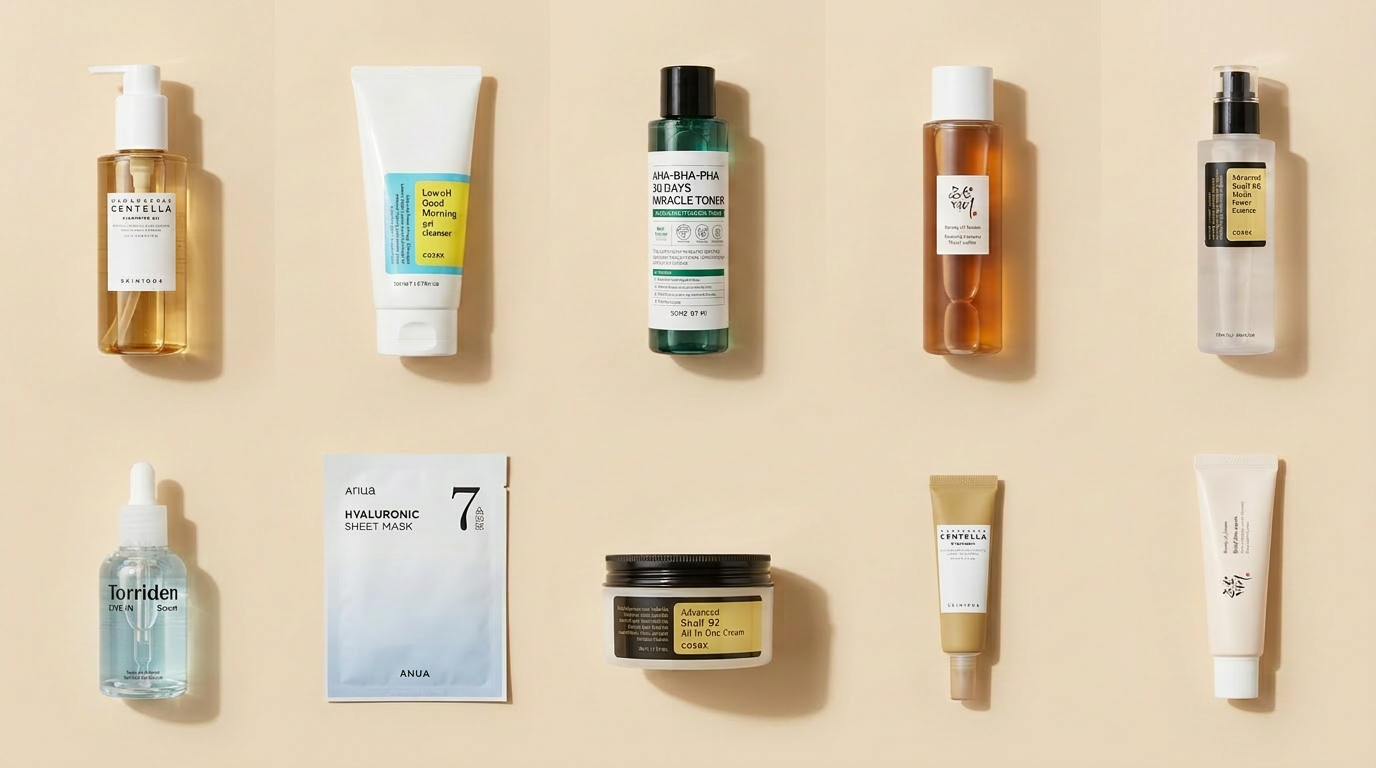
The 10 steps, in order
1. Oil cleanser (PM only). Dissolves sunscreen, sebum and makeup.
2. Water cleanser (AM + PM). A gentle low-pH gel or cream that finishes the job without stripping.
3. Exfoliant (2 to 3 PMs a week). AHA, BHA or PHA. Skin reset, not a daily step.
4. Toner. Hydrating and pH-balancing, watery texture.
5. Essence. The most Korean step. Lightweight, humectant-rich, primes the skin to absorb actives.
6. Treatment (serum or ampoule). The active layer: niacinamide, vitamin C, peptides, snail mucin, retinal.
7. Sheet mask (1 to 3 times a week). A 15 minute essence soak.
8. Eye cream. A lighter moisturiser for the thinner skin around the eye.
9. Moisturiser. Locks every layer underneath. Lighter in AM, richer in PM.
10. Sunscreen (AM only). The single most effective anti-ageing step in the entire routine.
Which steps you can skip
Step 3 (exfoliant): Skip on a barrier-stressed week. Twice a week is the maximum for most skin.
Step 5 (essence): If your toner already has humectants like glycerin or hyaluronic acid, you can skip the essence.
Step 7 (sheet mask): Pure self-care. Skin loses nothing if you never use one.
Step 8 (eye cream): A regular moisturiser dabbed gently around the eye is fine for most people under 40.
Steps you cannot skip: water cleanser, moisturiser, and sunscreen. Those three alone are 80% of the benefit.
AM vs PM, the same routine with two adjustments
AM: water cleanser, toner, essence, treatment, eye cream, moisturiser, sunscreen.
PM: oil cleanser, water cleanser, (exfoliant on treatment nights), toner, essence, treatment, eye cream, moisturiser. No sunscreen.
Two rules: double cleanse only at night, sunscreen only in the morning.
How long does the 10 step routine actually take
About 8 minutes morning, 12 minutes evening, once you stop reading the bottles every time.
Most of the time is waiting for products to absorb. Stack the wait time with brushing your teeth or making coffee, and the routine feels like 4 minutes of actual work.
How to build up to 10 steps without burning out
Month 1: cleanser, moisturiser, sunscreen. That is it. Train the habit.
Month 2: add a hydrating toner and one treatment serum based on your main concern.
Month 3: add an essence and start using sheet masks twice a week.
Month 4: introduce an exfoliant, an eye cream, and switch to oil cleansing at night.
By month 4 you are at 10 steps without ever feeling overwhelmed, and you know which products actually moved your skin.
Layering Actives: A Guide to Safe Combinations
Once you are comfortable with a basic routine, you might want to introduce 'actives'. These are powerful ingredients like Vitamin C, retinoids, and exfoliating acids (AHAs and BHAs) that target specific concerns like pigmentation, fine lines, and acne. Layering them correctly is essential for getting results while protecting your skin barrier.
A great morning combination is Vitamin C followed by sunscreen. Vitamin C is a potent antioxidant that helps protect your skin from environmental damage, and studies show it actually boosts the effectiveness of your SPF. Apply your Vitamin C serum to clean, dry skin, wait a minute for it to absorb, then follow with your moisturiser and sunscreen.
For your evening routine, consider pairing niacinamide with a retinoid. Niacinamide is a multi-tasking ingredient that can help calm inflammation and support the skin barrier, which makes it a perfect partner for retinoids (like retinol or retinal) which can sometimes cause irritation and dryness. You can apply the niacinamide product before your retinoid to act as a gentle buffer.
Some actives are best used on different days to avoid overwhelming your skin. For example, using a high-concentration AHA/BHA exfoliant and a retinoid in the same routine can lead to sensitivity and redness. A safer approach is to alternate them, using your exfoliant on one night and your retinoid the next. This concept, sometimes called 'skin cycling', gives your skin time to recover and reap the benefits of each ingredient.
The Art of Double Cleansing: More Than Just Makeup Removal
The double cleanse is the foundation of the Korean routine, and it is about more than just taking off makeup. The first step, an oil-based cleanser, works on the scientific principle of 'like dissolves like'. It effectively melts away all oil-based impurities, which includes not only makeup but also your daily sunscreen, excess sebum, and pollutants from the air.
Oil cleansers come in several forms, so you can choose one that suits your preference and skin type. Cleansing balms are solid in the jar and melt on contact with skin, making them great for travel and a luxurious feel. Liquid cleansing oils are a classic choice and can be very effective for dissolving stubborn mascara. Both are excellent for all skin types, including oily skin, as they help to balance sebum production.
A critical part of using an oil cleanser is the emulsification step. After massaging the oil or balm onto your dry face, add a small amount of lukewarm water with your fingertips and continue to massage. The oil will turn into a milky, thin liquid. This process binds the oil to the water, allowing it to be rinsed away cleanly without leaving a greasy residue.
Your second cleanse removes any remaining water-based impurities like sweat and dirt. For this step, choose a gentle, water-based cleanser with a low pH (around 5.5). Using a cleanser that is pH-balanced helps to protect your skin’s natural protective barrier, preventing the tight, stripped feeling that harsh cleansers can cause. This gentle approach ensures your skin is perfectly clean yet still calm and hydrated, ready for the next steps.
Understanding Ingredient Absorption: Maximising Your Routine
Getting the most out of your products is not just about what you use, but how you use it. Proper application technique ensures that each expensive drop is working its hardest for you. The most important rule is to apply products from the thinnest texture to the thickest, which generally means piling on the hydration.
Start with water-based products on damp skin. After cleansing, while your skin is still slightly moist or after spritzing a mist, apply your watery toner or essence. Damp skin is more permeable, and ingredients like hyaluronic acid work best when they have water to pull into the skin, giving you that plump, hydrated look.
Patience is also a key ingredient. For hydrating layers, you only need to wait a few seconds for one to absorb before applying the next. However, when using pH-dependent actives like Vitamin C (L-Ascorbic Acid) or exfoliating acids, you may want to wait a few minutes before the next step. For retinoids, applying them to completely dry skin (waiting 20 to 30 minutes after cleansing) can help minimise potential irritation.
Finally, consider the Korean method of patting products into the skin rather than rubbing. Gently patting your essence, serum, and moisturiser can enhance absorption and stimulate blood flow. It's also a much gentler approach for your skin, especially the delicate area around your eyes, reducing unnecessary pulling and friction.
A Realistic Timeline for Seeing Results
In the world of instant gratification, skincare is a practice in patience. While some benefits are immediate, the significant changes we all hope for take time and consistency. Knowing what to expect and when can keep you motivated and prevent you from giving up on a great routine too soon.
In the short term, from the very first use to about two weeks, you will notice improvements in skin hydration. Thanks to humectants like hyaluronic acid and glycerin in your toners, essences, and moisturisers, your skin will feel more plump, supple, and look dewier. A good double cleanse and gentle hydration can also give the immediate impression of brighter, calmer skin.
Mid-term results appear within one to two months. This aligns with your skin's natural turnover cycle, which is roughly 28 days (though it slows as we age). During this period, you can expect to see improvements in skin texture and clogged pores from ingredients like BHA (salicylic acid), or a reduction in inflammation from ingredients like niacinamide.
The most significant changes, such as a visible reduction in hyperpigmentation, fine lines, and increased firmness, are long-term goals. These results typically take at least three to six months of consistent use of powerful actives like retinoids, high-percentage Vitamin C, and peptides. The most critical factor for these long-term results is diligent, daily use of a broad-spectrum sunscreen, which prevents new damage from undoing your hard work.
Frequently asked
Keep reading
Tool
Build your routine
Pick skin type, concern and budget. Get a step-by-step routine with real products.
Tool
Check ingredient conflicts
Safe to combine, separate AM/PM, or skip. Clear verdicts for any two ingredients.