
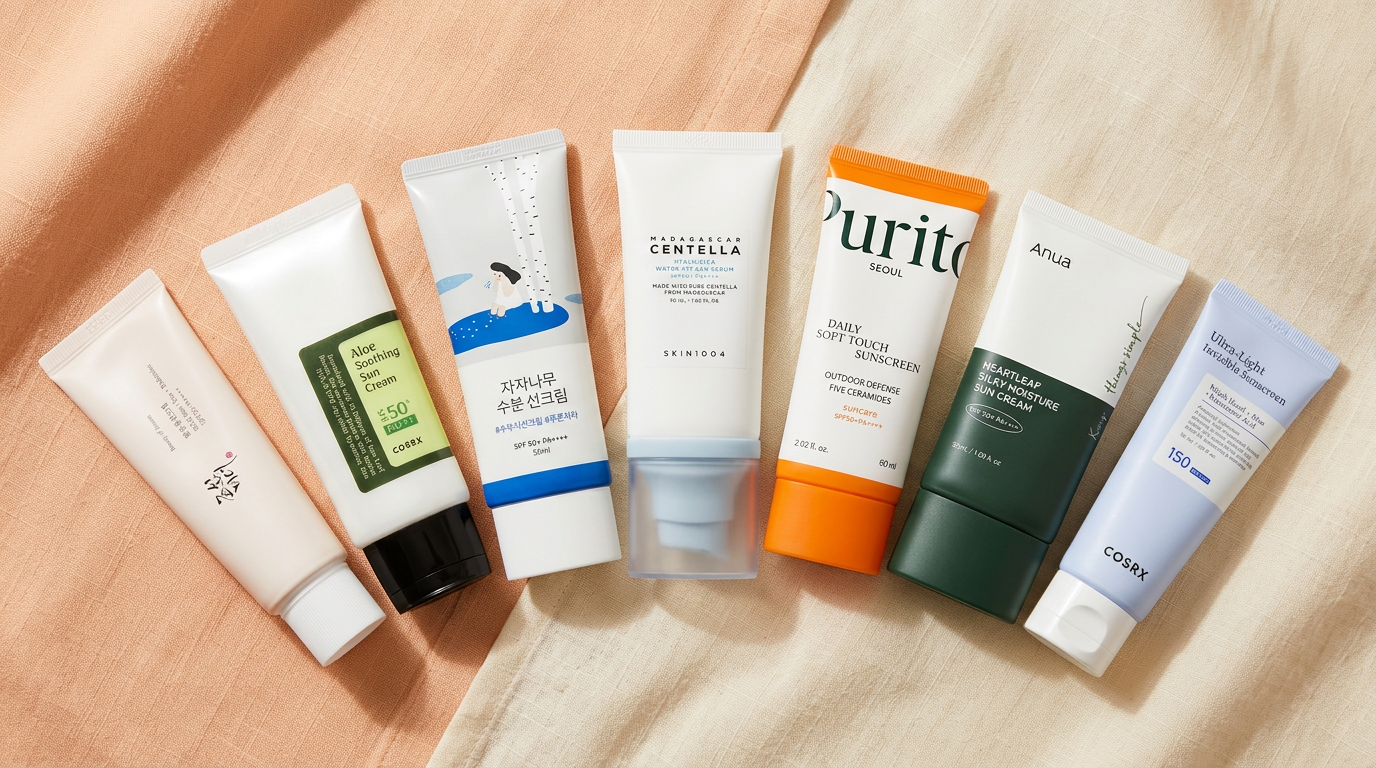
Best Korean Sunscreens 2026: The Honest Buyer's Guide
Last updated 21 June 2026
Korean sunscreens are the global gold standard for one reason: Korea approves modern UV filters that the US still does not. The result is lighter textures, better UVA coverage, and almost no white cast. Here are the best Korean sunscreens worth buying in 2026, organised by what your skin actually needs.
Best overall: Beauty of Joseon Relief Sun Rice + Probiotics
SPF 50+ PA++++, broad-spectrum modern filters, very light milky texture, no white cast on any skin tone.
Glowy finish without being greasy, plays beautifully under makeup, lightly brightening from the rice extract.
Around 15 to 18 EUR for 50 ml. Best price-to-performance sunscreen on the market in 2026.
Best for: normal, dry, combination, mature skin. Skip if you want a fully matte finish.
Best for oily skin: Round Lab Birch Juice Moisturizing Sunscreen
SPF 50+ PA++++, fluid texture, satin finish that resists shine for 4 to 6 hours.
Contains birch juice (a hydrating humectant) instead of water, which feels lighter and absorbs faster than most fluids.
Around 20 to 25 EUR for 50 ml. Worth the premium if your forehead goes oily by lunchtime.
Best for: oily, oily-combination, acne-prone skin.
Best for sensitive skin: SKIN1004 Madagascar Centella Hyalu-Cica Water-Fit Sun Serum
SPF 50+ PA++++, watery serum texture, centella and hyaluronic acid in the base for active calming.
Fragrance-free, essential-oil-free, alcohol low in the list. Tolerated by most rosacea-prone faces.
Around 18 to 22 EUR for 50 ml. The Cica formulation is genuinely different from the standard sunscreen base.
Best for: sensitive, reactive, post-procedure, easily-flushed skin.
Best mineral (zinc only): Purito Daily Soft Touch Mineral Sunscreen
SPF 50+ PA++++ from zinc oxide only. The safest pick for pregnancy, breastfeeding, very young skin, or rosacea.
Modern mineral formulation: minimal white cast for a zinc-only formula, no greasy heaviness.
Around 20 to 24 EUR for 50 ml. The best mineral Korean sunscreen we have tested.
Best for: anyone who reacts to chemical filters, or wants the most reef-friendly option.
Best for deep skin tones: Anua Heartleaf 70 Intensive Calming Sunscreen
SPF 50+ PA++++ chemical formula with heartleaf (Houttuynia cordata) extract. Zero white cast on deep skin.
Calming finish, slightly dewy. Works well over deeper foundation shades without ashing.
Around 18 to 22 EUR for 50 ml.
Best for: medium to deep skin tones tired of mineral or hybrid sunscreens that leave a cast.
Best premium pick: Make P:rem UV Defense Me Blue Ray Sun Cream
SPF 50+ PA++++, ultra-light cream-fluid hybrid, includes Tinosorb and Uvinul A Plus for top-tier UVA stability.
The most elegant Korean sunscreen we have tested. Truly invisible finish, no scent, no flashback in photos.
Around 30 to 35 EUR for 50 ml. Pricey, but earns it.
Best for: anyone who wants the absolute best texture and is willing to pay for it.
What to actually look for when buying a Korean sunscreen
SPF 50+ PA++++. PA++++ is the highest UVA rating, which matters for ageing and pigmentation.
Modern filters: Tinosorb S, Tinosorb M, Uvinul A Plus. These are why Korean sunscreens beat US ones.
50 ml minimum. The right daily face dose is half a teaspoon, which finishes a 30 ml tube in about 4 weeks.
Reapplication-friendly texture. If you hate the feel, you will skip the 2pm reapply, which is when sunscreen actually fails.
Decoding Modern Korean UV Filters
The secret to Korea's elegant sunscreens lies in their advanced chemical UV filters. Unlike the options available in some Western markets, these ingredients provide broad-spectrum protection without the thick, greasy feel or chalky finish. They are photostable, meaning they do not degrade as quickly in sunlight, giving you more reliable protection throughout the day.
Filters like Uvinul A Plus (Diethylamino Hydroxybenzoyl Hexyl Benzoate) and Tinosorb S (Bis-Ethylhexyloxyphenol Methoxyphenyl Triazine) are the heroes of the Korean sunscreen world. Uvinul A Plus is a formidable UVA filter, protecting against the rays responsible for premature ageing. Tinosorb S is a brilliant broad-spectrum filter that covers the full range of both UVA and UVB rays, and it also helps to stabilise other, less robust filters in the formula.
You will often see these new-generation filters combined in a single product. This synergy is key. A formula might use Uvinul T 150 for high UVB protection, Tinosorb S for broad-spectrum coverage, and Uvinul A Plus to specifically target long-wave UVA rays. This cocktail approach allows formulators to achieve high SPF and PA ratings while keeping the texture light and wearable for daily use.
| Filter Name | Protects Against | Key Benefit |
|---|---|---|
| Uvinul A Plus | UVA | Excellent photostable protection against ageing rays. |
| Uvinul T 150 | UVB | Very high, photostable protection against burning rays. |
| Tinosorb S | UVA & UVB | Broad-spectrum, highly photostable, stabilises other filters. |
| Tinosorb M | UVA & UVB | Hybrid filter (absorbs and reflects) for broad coverage. |
| Mexoryl SX | UVA | Water-soluble filter, often used in lighter lotions. |
Mastering Reapplication: Sprays, Sticks, and Cushions
Applying sunscreen once in the morning is a great start, but protection fades. To maintain coverage, you should reapply every two hours of direct sun exposure, or after swimming or sweating. This can feel daunting, especially if you are wearing makeup, but Korean brands have developed clever formats to make it simple.
Sun sticks are a fantastic option for reapplying on the go. Simply glide the stick gently over your face, neck, and hands. They deposit a sheer layer of protection with minimal disruption to makeup. Look for silky, non-greasy formulas like the Abib Quick Sunstick Protection Bar or the Isntree Hyaluronic Acid Airy Sun Stick to avoid tugging at your skin or foundation.
Sun cushions and sprays are two other convenient methods for reapplication. Sun cushions, which look just like foundation compacts, allow you to gently pat a fresh layer of SPF over your makeup. Sun sprays can be misted over the face, but be careful to apply enough. To ensure adequate coverage with a spray, hold it close to the face and spray until the skin has a visible sheen, then gently pat it in, keeping your eyes and mouth closed.
A key tip for reapplying over makeup is to first blot away any excess oil or sweat with a tissue or blotting paper. This creates a cleaner canvas for your top-up, preventing a cakey or patchy result. Whichever method you choose, consistency is what matters for keeping your skin protected all day long.
Sunscreen and Skincare: Perfect Pairings and Pilling Prevention
Sunscreen should always be the final step in your morning skincare routine, applied just before any makeup. For an antioxidant boost, apply a Vitamin C serum before your sunscreen. Vitamin C helps to neutralise free radical damage from UV rays that get past your sunscreen's filters, essentially acting as a second line of defence for your skin. The two work in beautiful synergy.
If you use hydrating serums or essences containing ingredients like hyaluronic acid or snail mucin, allow them to fully absorb before your sunscreen layer. A good rule of thumb is to wait at least a minute or two until your skin feels slightly tacky or dry to the touch. This simple pause is the most effective way to prevent pilling, which happens when products on the skin's surface ball up into tiny flakes.
Pilling can also occur from texture incompatibility. If you apply a water-based serum followed by a heavy, silicone-based sunscreen too quickly, they may not mix well. To avoid this, try to match your textures (e.g., water-based serums with lighter, essence-like sunscreens) or simply build in more drying time between your layers. Gentle patting motions instead of vigorous rubbing can also make a significant difference in achieving a smooth, seamless finish.
Beyond the Face: Protection for Neck, Chest, and Hands
The skin on your neck, chest (décolletage), and the backs of your hands is thin and just as exposed to the sun as your face. These areas often show signs of sun damage and ageing, like fine lines and sunspots, even earlier than the face. Making a habit of extending your sun protection downwards is one of the best long-term investments in your skin's health.
You do not necessarily need a separate product for these areas. You can simply use your facial sunscreen and apply the same two-finger amount to your neck and upper chest. The lightweight, non-sticky nature of most Korean sunscreens makes them perfect for this purpose, as they will not feel heavy or stain your clothes.
For the backs of your hands, consider keeping a sun stick or a travel-sized tube of sunscreen in your bag. This makes it easy to reapply after washing your hands throughout the day, which is when protection is most easily removed. Consistent application to these overlooked zones ensures you are protecting all of your skin, not just your face, from the cumulative effects of daily UV exposure.
Frequently asked
Keep reading
Tool
Build your routine
Pick skin type, concern and budget. Get a step-by-step routine with real products.
Tool
Check ingredient conflicts
Safe to combine, separate AM/PM, or skip. Clear verdicts for any two ingredients.